Recruiting has evolved more in the last 2-3 years than it has in the previous two decades. Paper resumes, phone screenings, and lengthy scheduling calls are being replaced by automated, clever AI recruitment technologies capable of reading resumes, predicting candidate success, and even conducting interviews.
In this guide, we’ll walk through the best AI recruiting tools that redefine how modern teams hire. These aren’t hypothetical or buzzword-heavy systems. These are real AI recruitment platforms trusted by top companies worldwide, tools that make hiring faster, smarter, and surprisingly human.
1. Manatal
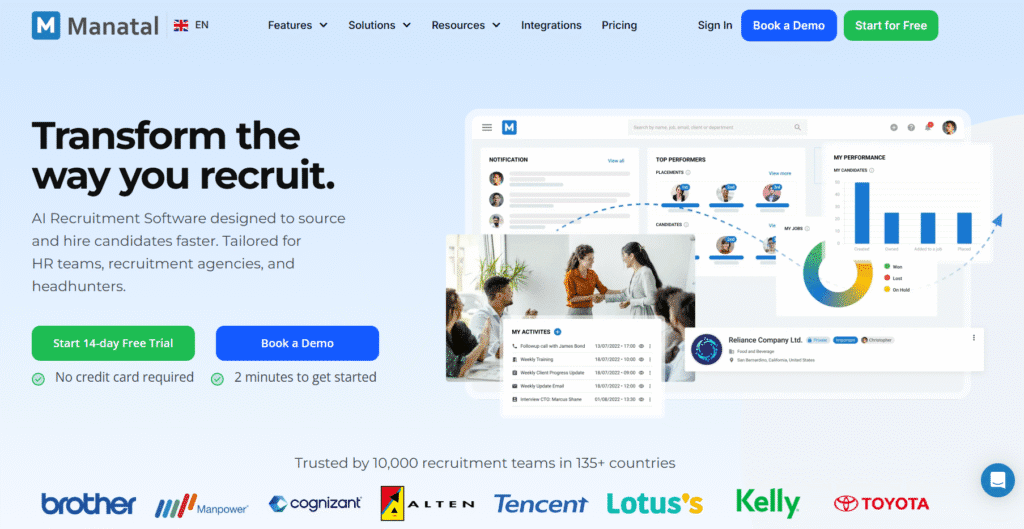
Manatal is one of the most affordable yet robust AI recruitment software options today. It is designed for small and medium-sized teams, combining automation with simplicity, drag-and-drop pipelines, intelligent candidate recommendations, and simple job board interfaces. Its AI engine reads job descriptions, searches candidate databases, and suggests the best candidates. Recruiters may view ranked profiles instantaneously, with AI ranking based on education, abilities, and previous experience.
Pros
- Straightforward interface suitable for non-technical teams
- Fast resume parsing and candidate ranking
- Cloud-based with excellent collaboration tools
- 24/5 live support and strong onboarding
Cons
- Limited customization for enterprise-level workflows
- Fewer integration options than larger ATS systems
Pricing
Starts at $15/user/month (Professional plan). Enterprise plan costs $35/user/month, while Enterprise Plus is $55/user/month with API access, SSO, and Beta features.
2. HireVue
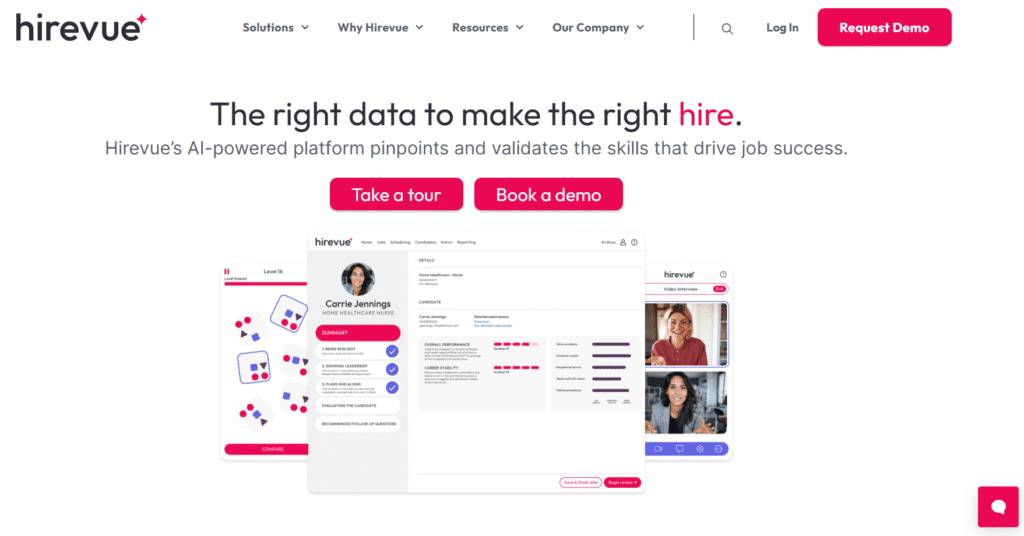
HireVue is a pioneer in AI video interviews. Its system combines recorded video and AI assessments to evaluate skills, communication, and even problem-solving ability. Candidates record responses on their own time; recruiters review AI-scored interviews that predict future performance. It supports 40+ languages and can integrate with HR systems like Greenhouse and Workday.
Pros
- Scales easily for global hiring
- AI-powered skill and personality analyses
- Built-in video, technical, and game-based tests
- Improves screening speed by up to 60%
Cons
- Expensive for small businesses
- Some users question AI bias in interpretation
Pricing
The enterprise model starts at approximately $35,000/year, varying by volume. Assessments are $25–$50 each. Advanced features and integrations are add-ons.
3. Eightfold.ai
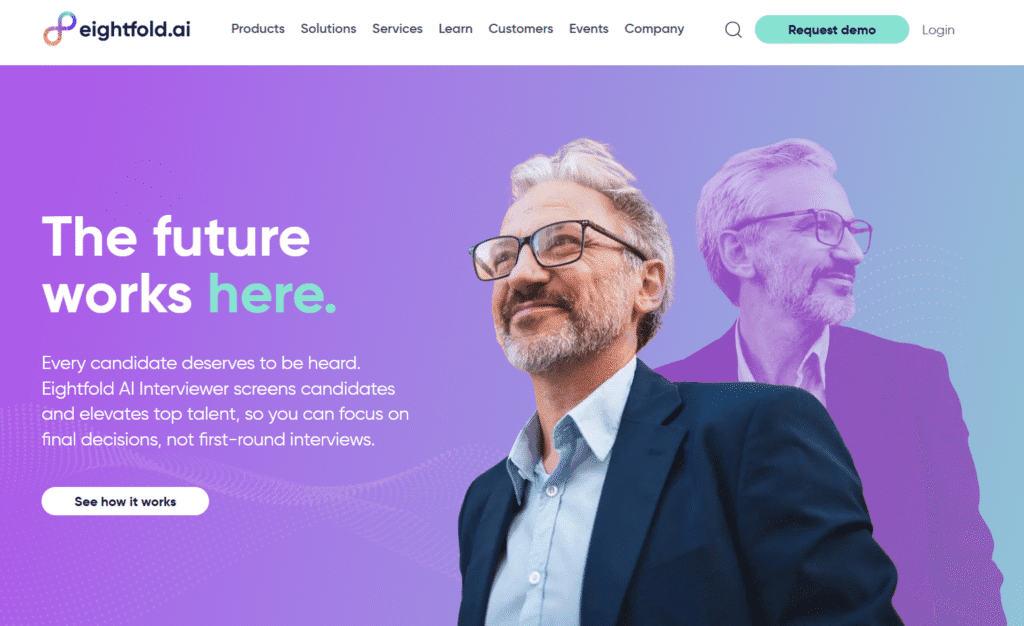
Eightfold.ai blends recruitment with workforce intelligence. Its AI recruitment platform uses deep learning to match people to roles and map future skills. With its “Digital Twin” concept, Eightfold predicts how job roles evolve and which internal employees can be reskilled. Its Agentic AI acts like a recruiter that never sleeps, analyzing profiles, ranking fits, and learning continuously.
Pros
- Excellent skill-matching intelligence
- Ethical transparency with bias controls
- Integrates ATS, upskilling, and retention features
- Global data pool of 1.6+ billion profiles
Cons
- Complex setup process for SMBs
- Lacks low-end tiers or entry pricing
Pricing
Custom enterprise pricing based on workforce scale and integration needs.
4. Skillate
Skillate is all about speed and clarity in hiring. The platform’s deep learning algorithms read resumes, fill in data gaps, and predict candidate-job fit automatically. It comes with a chatbot for screening, an AI job description assistant, and auto-scheduling capabilities. Skillate is ideal for large firms that need precision and scale. Its resume parser handles thousands of profiles in seconds.
Pros
- Unbiased screening through AI
- Automated job description improvement
- Strong analytics and dashboards
Cons
- Not suited for microteams
- Pricing transparency is limited
Pricing
Customized pricing upon request, tailored by volume and company size.
5. Pinpoint
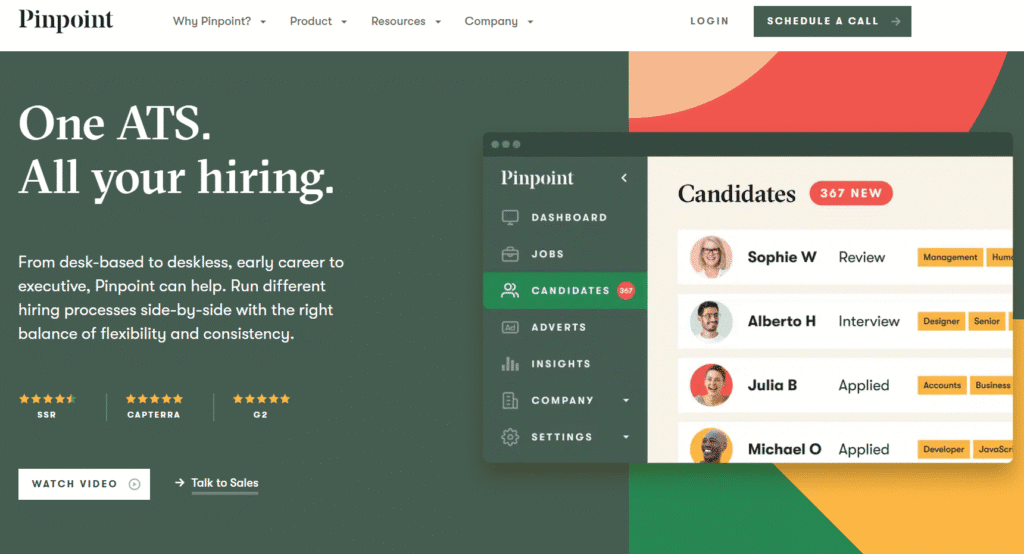
Pinpoint’s AI adds fairness and consistency to recruiting. It anonymizes resumes, removing names and gender, and scores candidates purely on skills. The platform merges ATS functionality with AI-driven automation, helping companies minimize bias and administrative delay. It highlights interpreted skills from candidate data to create a fair, skills-first ranking system.
Pros
- Excellent anonymized candidate evaluation
- Automated tasks and communications
- Customizable pipelines
Cons
- Limited mobile app support
- Premium features can get pricey
Pricing
Starts at roughly $249/month for standard ATS access, scaling to custom enterprise pricing.
6. Paradox
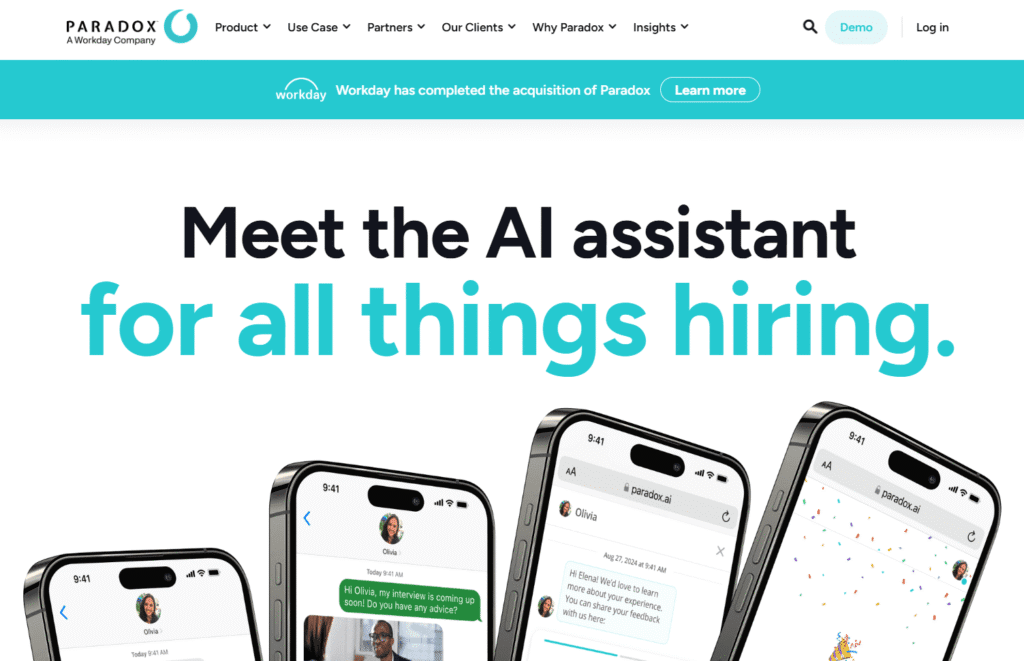
Paradox’s conversational AI assistant, Olivia, is the heartbeat of high-volume hiring. Olivia chats with candidates via text, answers questions, screens applicants, and schedules interviews automatically. Used by Starbucks, McDonald’s, and Unilever, it’s one of the best AI recruiting tools for industries hiring hourly or seasonal talent at scale.
Pros
- Automates 24/7 candidate engagement
- Rapid interview scheduling
- Integrates with ATSs like Workday and SAP
- Proven 80%+ completion rates for applications
Cons
- Overkill for small-volume hiring
- Requires implementation support
Pricing
Custom pricing depending on usage volume. Enterprise packages offer priority integration and analytics.
7. Checkr
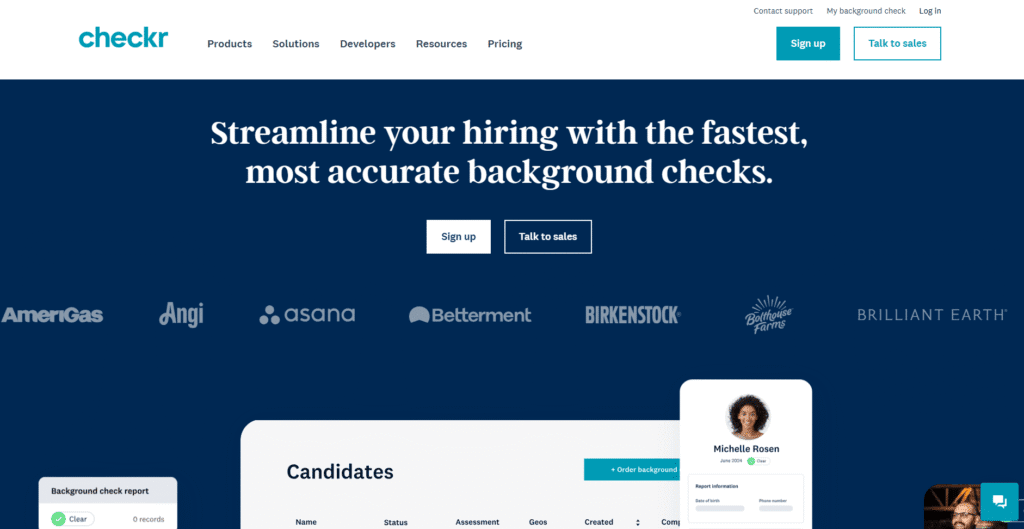
Checkr is an AI recruitment software that specializes in automated background checks integrated into the hiring pipeline. It’s used by leading brands across gig platforms, SMBs, and enterprise-level recruitments to verify candidate data rapidly. Its AI engine classifies criminal charges, verifies employment and education history, and even predicts turnaround times for complex checks.
Pros
- Exceptionally fast and accurate screening
- Dynamic ETA tracking for background checks
- Seamless ATS integrations
Cons
- Limited front-end recruiting functions
- Pay-per-check model can add up
Pricing
Starts at $29.99 per background check, with enterprise plans scaling by candidate volume.
8. Humanly
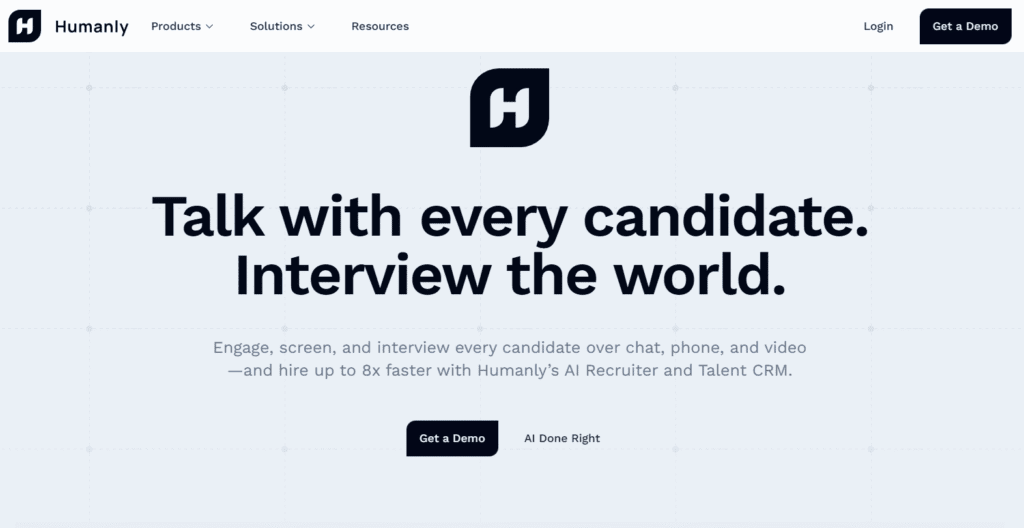
Humanly uses AI to screen, schedule, and summarize interviews automatically. The platform’s conversational AI “co-pilot” joins live interviews, takes notes, and generates summaries that highlight key insights. It’s perfect for mid-sized businesses that already use an ATS but want automation in candidate communications.
Pros
- Real-time transcription and notes
- Integrates with Greenhouse, Lever, and Bullhorn
- Generates AI-based follow-up emails and candidate insights
Cons
- No self-rescheduling option for candidates
- Lacks a free plan or trial
Pricing
Custom pricing; available upon request. Tailored packages for midsize teams.
9. Canditech
Canditech is one of the most advanced AI recruitment tools for pre-employment testing and job-simulation assessments. It transforms traditional hiring by allowing companies to evaluate real skills instead of relying on resumes or guesswork.
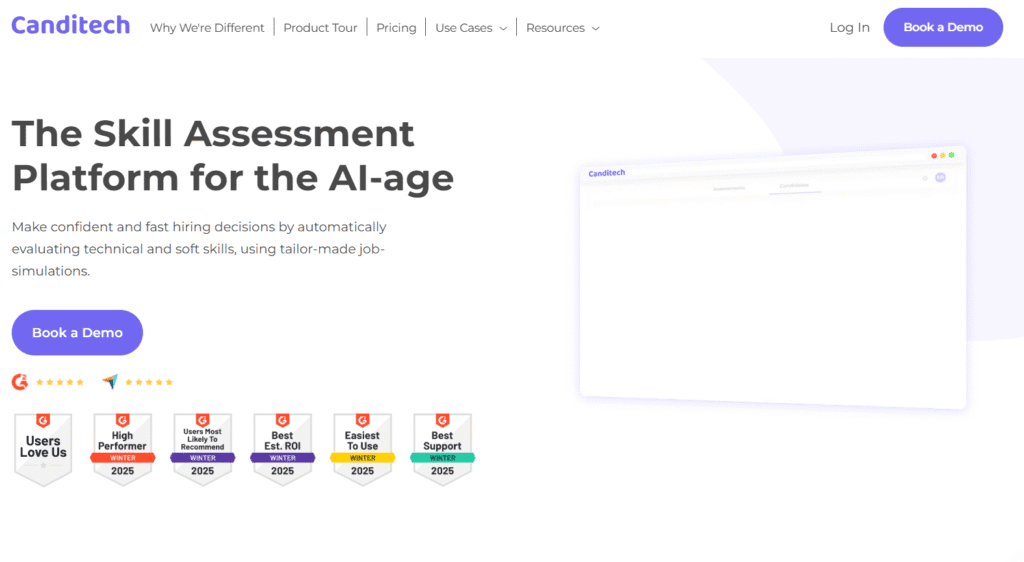
Using AI-driven job simulations, Canditech immerses candidates in realistic work scenarios, such as coding, data analysis, or client presentations, and then scores their performance based on objective criteria.
Pros
- Realistic job-specific tests
- Great for pre-hire screening
- Scalable for technical and analytical roles
Cons
- Assessment setup can take time
- Not ideal for manual or hourly roles
Pricing
Priced per assessment; custom quotes provided by sales.
10. Greenhouse
Greenhouse is one of the best AI recruitment platforms for structured, enterprise-level hiring. Beyond applicant tracking, it embeds fairness into hiring with interview scorecards and bias checks. Its automation rules streamline candidate progress and email follow-ups. Greenhouse is ideal for global teams needing standardized hiring workflows.
Pros
- Built-in bias reduction features
- Strong automation and scheduling tools
- Integrates with 400+ HR applications
Cons
- Pricing hidden behind sales demos
- No free trial
Pricing
Enterprise-level, custom pricing based on seats and job volume.
11. Syndio
Syndio has positioned itself as one of the most forward-thinking AI recruitment tools for companies striving for true workplace fairness. It is not a conventional recruiter-facing system; it’s a powerful AI recruitment platform built to promote equitable decisions in pay, promotion, and opportunity across organizations. Through its Intelligent Pay™ engine, Syndio embeds AI directly into compensation workflows, using predictive analytics to help HR teams eliminate bias and make transparent, defensible decisions.
Pros
- Excellent pay equity analytics
- HR data visualization dashboards
- Enhances DEI initiatives
Cons
- Not a direct hiring tool
- Limited candidate management functions
Pricing
Custom enterprise pricing.
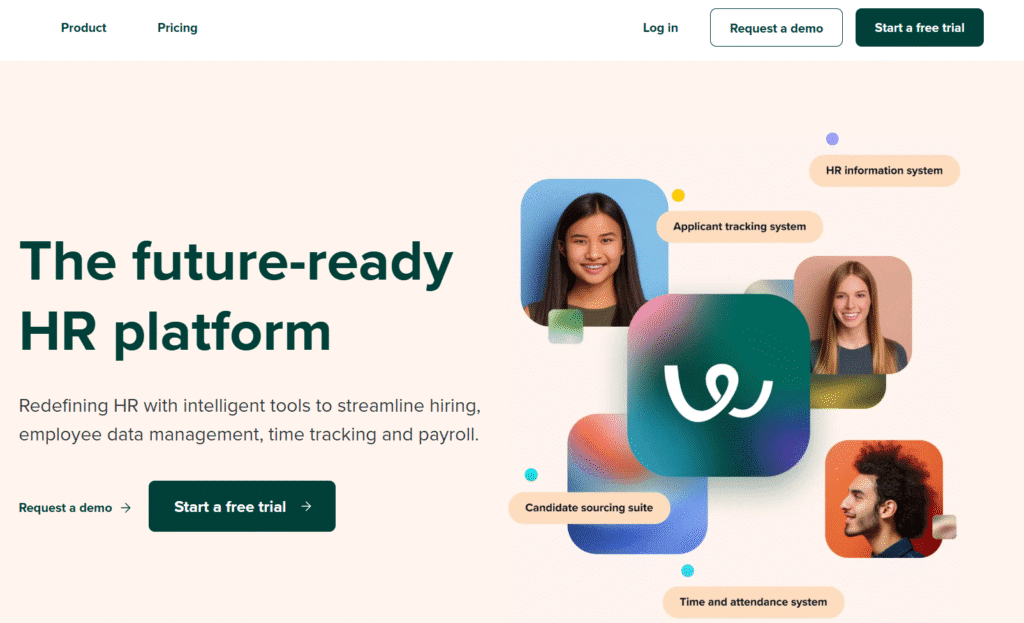
12. Workable Recruiting
Workable Recruiting has solidified its place among the best AI recruitment tools by transforming traditional applicant tracking into an intelligent, data-driven experience. Its intuitive design and deep AI integration make it a favorite for growing teams and enterprises alike. It doesn’t just track candidates, it intelligently sources, screens, and engages them using automation and contextual learning.
Pros
- 290+ integrations, including video and assessments
- Built-in AI Screening Assistant
- Generative AI for job descriptions
Cons
- Higher base cost than rivals
- No chatbot functionality
Pricing
Starts at $299/month (Standard plan). The Premier plan is $599/month, with add-ons for texting and video interviews.
13. Boon
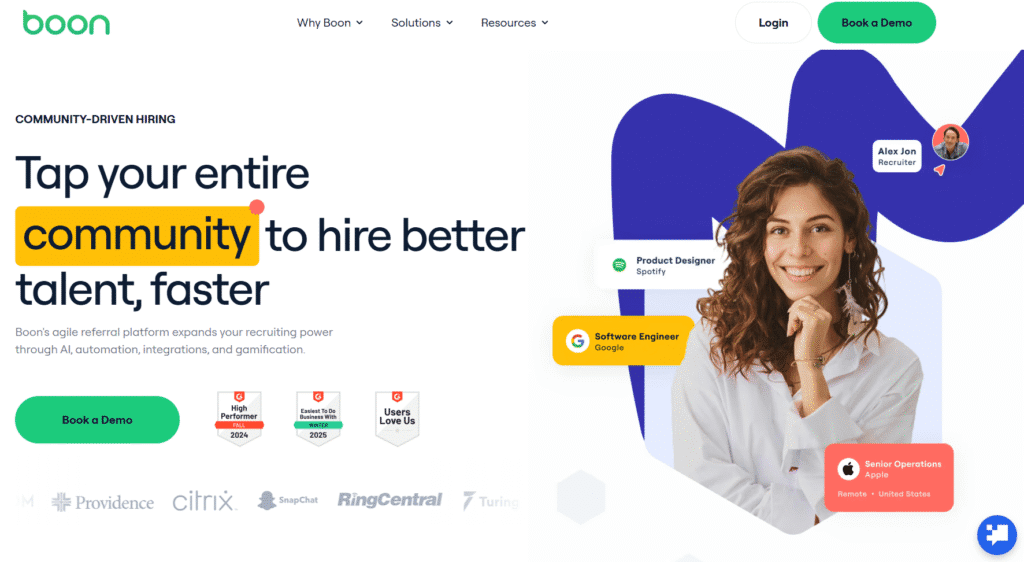
Boon is not just another AI recruitment platform; it’s an entirely new way of thinking about referrals. Instead of relying solely on job boards or recruiters, Boon capitalizes on the one resource every company already has: its people. By turning employees into active talent scouts, this AI recruitment software helps organizations find quality hires faster, cheaper, and with higher cultural alignment than traditional channels.
Pros
- Boosts internal referrals effortlessly
- AI identifies hidden candidate matches
- Integrates with standard ATSs
Cons
- Dependent on team participation
- Smaller companies see slower results
Pricing
Custom pricing; typically based on employee size and usage.
14. Recruit CRM
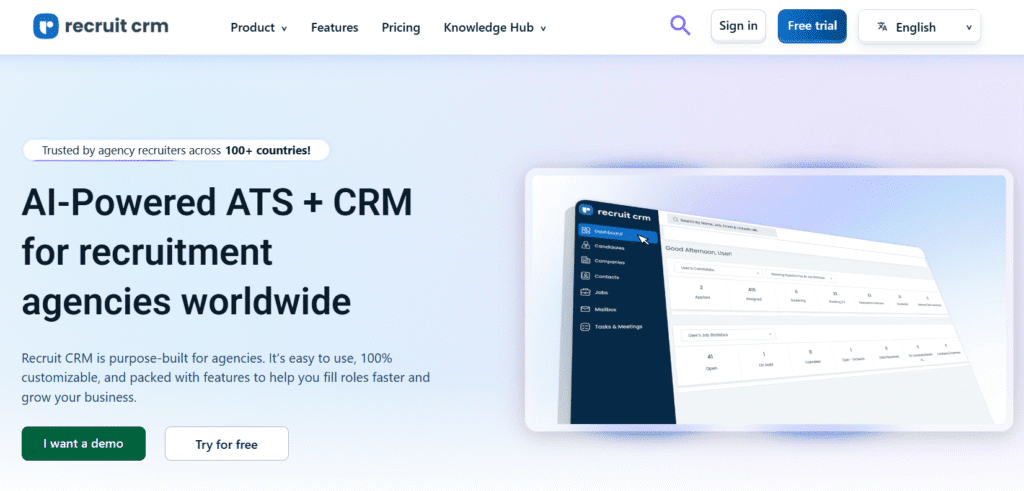
Recruit CRM has developed into one of the most advanced AI recruitment platforms, designed exclusively for recruitment agencies and staffing organizations that require both automation and relationship management under one roof. It effortlessly integrates Applicant Tracking System (ATS) capabilities and Customer Relationship Management (CRM) elements, providing recruiters with a single platform for more efficient applicant sourcing, management, and placement.
Pros
- Combines CRM + ATS functionality
- Great for staffing agencies
- Chrome sourcing plugin
Cons
- The interface can feel cluttered
- Limited marketing automation
Pricing
Standard plans start at around $85/user/month. Enterprise plans go higher with additional integration features.
Instead of jumping between platforms, use Pick AI, an AI tools discovery platform that helps you to explore AI tools and turn concepts from your masters in artificial intelligence into practical, real-world use cases with curated AI courses.
Conclusion
AI isn’t replacing recruiters, it’s empowering them. The best AI recruitment tools amplify human judgment, not diminish it. They cut the noise, automate clutter, and make sure good candidates never slip through the cracks. Whether it’s Manatal simplifying hiring for startups, HireVue adding science to interviews, or Paradox running instant text-based screenings, today’s AI recruitment platforms help answer one big question: How can we hire better, not just faster? These tools prove that with the right technology, recruitment can finally feel personal again, just smarter, sharper, and endlessly scalable.
Related Articles
- 20 Best AI Video Generators with Detailed Comparison
- 30 Best AI Marketing Tools You Can’t Ignore
- 15 Best AI Email Marketing Tools to Try
- 19 Essential AI Content Marketing Tools for Every Business
- 17 Must-Try AI Tools for Social Media Marketing
- 16 Best AI Content Creation Tools for Creators